如何创建线程池
如何创建线程池
- 创建线程池一般有两种方法:
- 使用
ThreadPoolExecutor创建线程池(推荐) - 使用
Executors工具类创建线程池(不推荐用于生产环境)- 不推荐的原因是使用
Executors创建的线程池使用的阻塞队列或同步队列都可以看做是无界的,可能会导致OOM
- 不推荐的原因是使用
- 使用
1. 线程池简介
- 池化技术主要是为了减少每次获取资源的消耗,提高资源利用率
- 线程池提供了一种限制和管理资源的方式,每个线程池还维护一些基本统计信息
- 线程池的好处:
- 降低资源消耗
- 提高响应速度
- 提高线程管理的可管理性
2. Java中创建线程池的方式
- Java中创建线程池主要有两种方式:
- 使用
ThreadPoolExecutor构造函数直接创建(推荐) - 使用
Executors工具类创建(不推荐用于生产环境)
- 使用
2.1 使用ThreadPoolExecutor构造函数创建线程池
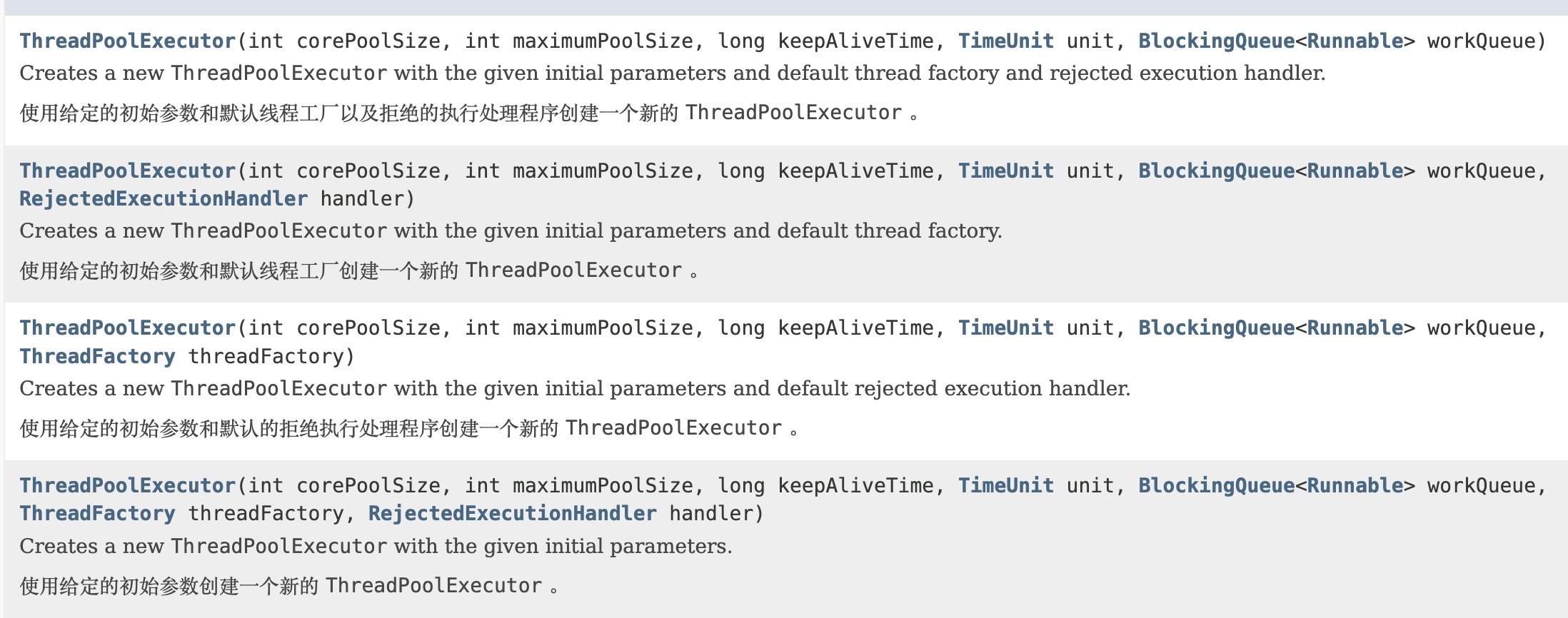
- 推荐这种方式,因为它允许开发者明确指定线程池的核心参数,对线程池的运行行为有更精细的控制
2.2 使用Executors工具类创建线程池
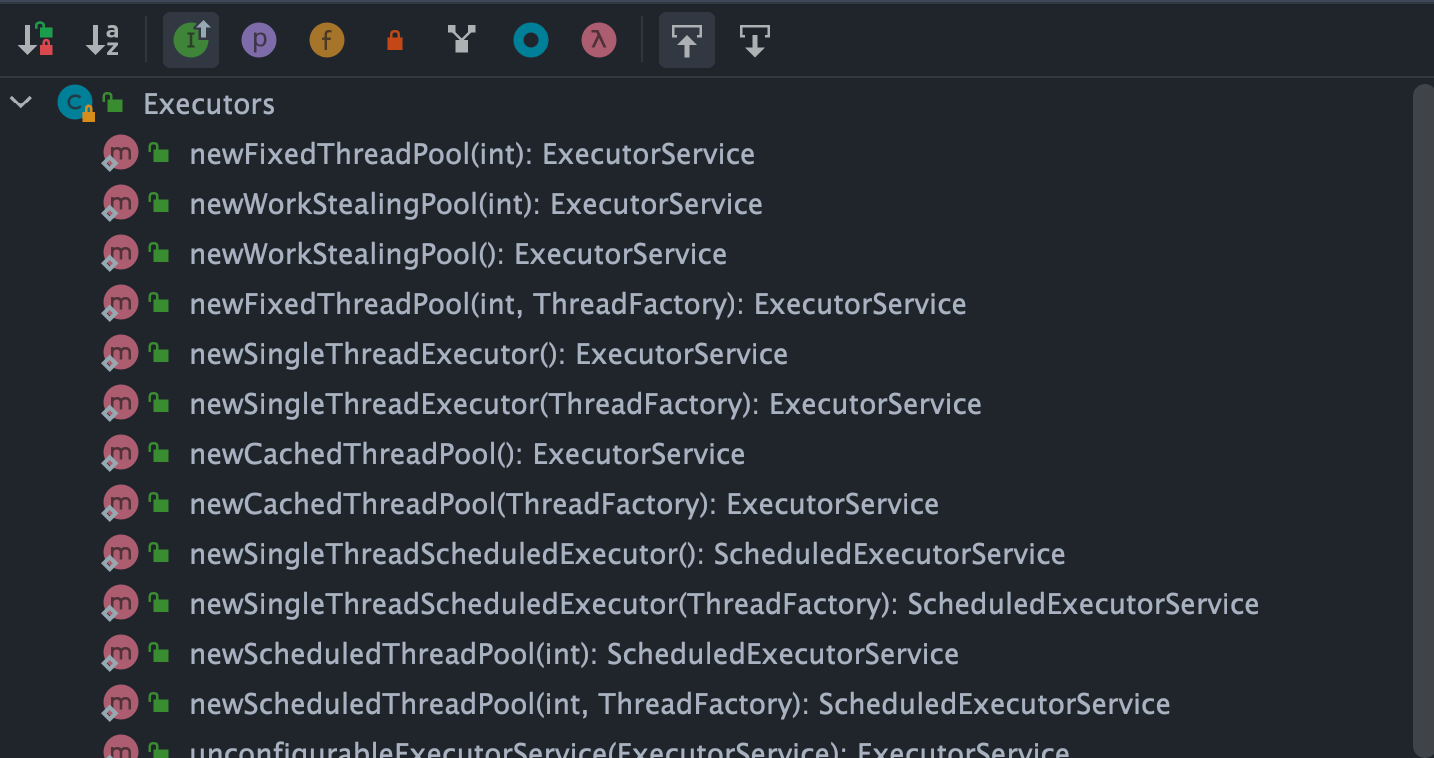
- 使用这种方式可以创建多种类型的线程池:
FixedThreadPool:固定线程数量的线程池SingleThreadExecutor:只有一个线程的线程池CachedThreadPool:根据需要创建新线程的线程池。若所有线程都在工作且又有新任务提交,则会创建新的线程,线程执行任务完成后会返回线程池进行复用ScheduledThreadPool:给定的延迟后运行任务或定期执行任务的线程池
3. 为什么不推荐使用Executors创建线程池
-
简而言之:使用Executors创建的线程池可能会导致OOM(OutOfMemoryError)
-
FixedThreadPool和SingleThreadExecutor:使用的是阻塞队列LinkedBlockingQueue,允许创建的线程数量为Integer.MAX_VALUE,可以看做是无界的,可能堆积大量请求,从而导致OOM(OutOfMemoryError) -
CachedThreadPool:使用的是同步队列SynchronousQueue,允许创建的线程数量为Integer.MAX_VALUE,如果任务数量过多且执行速度较慢,可能会创建大量的线程,从而导致OOM -
ScheduledThreadPool和SingleThreadScheduledExecutor:使用的无界的延迟阻塞队列DelayedWorkQueue,任务队列最大长度为Integer.MAX_VALUE,可能堆积大量的请求,从而导致OOM
1 | public static ExecutorService newFixedThreadPool(int nThreads) { |