Leetcode 235.二叉搜索树的最近公共祖先
题目要求
- 给定一个二叉搜索树, 找到该树中两个指定节点的最近公共祖先。
百度百科中最近公共祖先的定义为:“对于有根树 T 的两个结点 p、q,最近公共祖先表示为一个结点 x,满足 x 是 p、q 的祖先且 x 的深度尽可能大(一个节点也可以是它自己的祖先)。”
- 例如,给定如下二叉搜索树: root = [6,2,8,0,4,7,9,null,null,3,5]
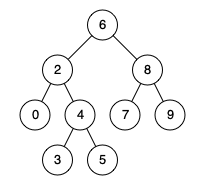
示例 1:
输入: root = [6,2,8,0,4,7,9,null,null,3,5], p = 2, q = 8
输出: 6
解释: 节点 2 和节点 8 的最近公共祖先是 6。
示例 2:
输入: root = [6,2,8,0,4,7,9,null,null,3,5], p = 2, q = 4
输出: 2
解释: 节点 2 和节点 4 的最近公共祖先是 2, 因为根据定义最近公共祖先节点可以为节点本身。
层序遍历
因为二叉搜索树的性质是:对于每个节点,左子树的值都小于该节点的值,右子树的值都大于该节点的值。所以对于p和q,他们的公共祖先的值一定在q和p之间。
所以层序遍历遇到的第一个值位于p和q之间的节点就是他们的公共祖先。
1
2
3
4
5
6
7
8
9
10
11
12
13
14
15
16
17
18
19
20
21
22
23
24
25
26
27
28
29
30
31
32
33
34
35
36
|
class Solution {
public TreeNode lowestCommonAncestor(TreeNode root, TreeNode p, TreeNode q) {
if (root == null) return null;
Queue<TreeNode> queue = new LinkedList<>();
queue.add(root);
int max = q.val;
int min = p.val;
if (p.val > q.val){
max = p.val;
min = q.val;
}
while (!queue.isEmpty()) {
int size = queue.size();
while (size > 0) {
TreeNode node = queue.poll();
if (node.val >= min && node.val <= max) return node;
if (node.left != null) queue.add(node.left);
if (node.right != null) queue.add(node.right);
size--;
}
}
return null;
}
}
|
递归法
1
2
3
4
5
6
7
| class Solution {
public TreeNode lowestCommonAncestor(TreeNode root, TreeNode p, TreeNode q) {
if (root.val > p.val && root.val > q.val) return lowestCommonAncestor(root.left, p, q);
if (root.val < p.val && root.val < q.val) return lowestCommonAncestor(root.right, p, q);
return root;
}
}
|
迭代法
1
2
3
4
5
6
7
8
9
10
11
12
13
14
| class Solution {
public TreeNode lowestCommonAncestor(TreeNode root, TreeNode p, TreeNode q) {
while (true) {
if (root.val > p.val && root.val > q.val) {
root = root.left;
} else if (root.val < p.val && root.val < q.val) {
root = root.right;
} else {
break;
}
}
return root;
}
}
|